
As Holy Week rolls in for 2020, I finished reading Ethan Hawke’s Ash Wednesday. The novel came to a rather quick ending, which left me with two immediate questions: Does he have a newer novel to read? Was he tired of the story or did not know where to take it, thus he ended it quickly?
I was under the preconceived notion that I would just have “push through” the novel, but as I allowed myself to be open to the story, Mr. Hawke’s narrative grew on me. The characters are definitely realistic; they are confused, lonely, and see their unborn child and marriage as a way to give themselves meaning. I do not make the statement about “giving meaning to their lives” lightly as I also finished another book this morning, Cheap Sex by sociologist, Mark Regnerus, PhD. Both books are worth our time beyond the current pandemic. What happens as the main characters, Jimmy and Christy of Ash
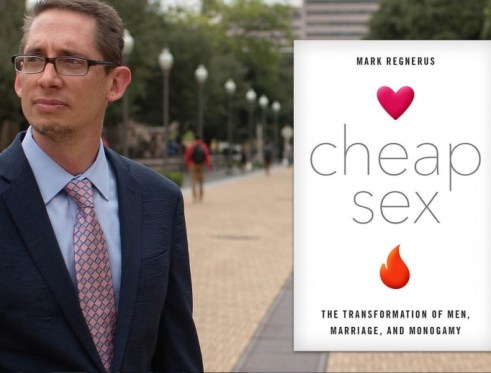
Wednesday, come to the turning point of the book, a doctor cannot find the heart beat of their unborn child, a 300 mile argument ensues, and one of them is thrown into the jail. Are they really in love? Or are they just looking for meaning? Perhaps both? Ash Wednesday’s characters can possibly be two of the people interviewed and questioned for Dr. Regnerus’s study. The history of sex, relationships and the purpose of marriage as stated by Regnerus can be seen in the struggle of the characters in Ash Wednesday.
Hawke’s characters in 2002 are the recent past to the reality of how Regnerus exams the state of sex and even marriage today. Love, marriage and children are not cheap, for Christy and Jimmy, and yet they choose each other without knowing how things will go. The young people interviewed by Dr. Regnerus in and around 2012 choose “Cheap Sex” over love, marriage, and children.
Mr. Hawke uses characters who make one time appearances in the story to guide or give the hope to Christy and Jimmy on the path they have chosen. Two of them are worth mentioning, but the author uses other characters in the same vain. Early in the story an old, blind man interacts with Christy. Their interaction ends with these words: “‘Would it bother you if I mentioned God?’ he said in a whisper. ‘Yes,’ I said. ‘It’d scare the shit out of me” (Hawke, 29).
Later, Jimmy is in conversation with two strangers one being a homeless man who has a unique way of living out Lent over the last three years. The old homeless man is described, “ankles, how swollen and disfigured they were. He wasn’t wearing socks and the fungus and filth of this skin made my stomach queasy” (Hawke, 217). And yet, Jimmy hears the old man’s words, “Humility is the only thing worth learning. Shatter the ego. Dance in the perfect contradiction of life and death” (217).
As the novel continues we see how Jimmy and Christy feel about God. As they prepare to get married, Jimmy has a notion that they should be married in the Church, even though neither one of them attends church. In pursuing this notion, Jimmy visits his old pastor, who he has always looked up and trusted. Fr. Matthew in their one conversation the reader gets to partake, he speaks to Jimmy about the sacrament of Confession:
‘And confession is the most misunderstood. Sin itself is not something you should feel guilty about; there is no punishment for, or disapproval of, sin. The sin itself is punishment. Are you following me?’ He forced me to meet his eyes. ‘You turn away from the light, and darkness is the punishment…if you lie…you live life in deceit, and if you do that long enough you’ll come to see that there need be no penalties other that the ones you’ve created yourself. Confession is not designed to alleviate guilt;’
Fr. Matthew pivots Jimmy toward not just living for something more than himself and even more than Christy and their unborn baby. Jimmy is stirred to be reconnected with God.
Back in the motel, Jimmy is moved by reading the prayer book or their marriage preparation, he does not ponder whether God exists or not, but is moved by the beauty of language and memory. He pivots on contemplating God through the words of the prayers:
I was sitting on the bed with my shirt off, my jeans on, the television muted, and my nose buried in that prayer book.
The Lord’s prayer was always my favorite: Forgive us our trespasses as we forgive those who trespass against us. Reading all the blessings and vows got to me somehow. They were filling me up, like water collecting in a cloud, making me exceedingly emotional. I can’t say it was honestly the mystery of Christ moving through me, it might’ve been the familiarity of the words or simple nostalgia, but these passages were searing through my chest…It felt good to be near these words again, like there had been some order, a constant presence in my life, even though I had been blind to it. (Hawke 140-141)
Seeking to share this moment of beauty, he reads the prayers aloud to Christy. Her response is quite the opposite: “…Christy’s expression shocked me. She was frightened. ‘You are not born again or anything, are you?’ she asked me earnestly…’I think it’s–I don’t know, it scares me” (Hawke 143).
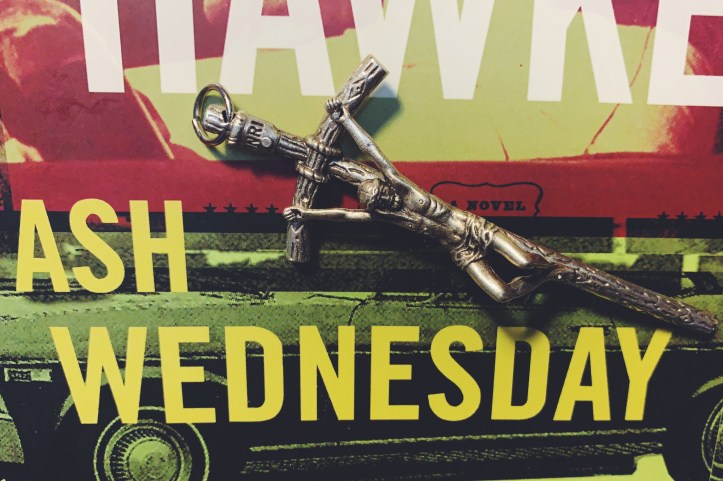
I leave you with words from the homeless old man speaking with Jimmy, “Everything that’s born dies, right? We all agree on that; the only thing we don’t know is when. Today, Ash Wednesday, is the day our Father set aside for us to acknowledge that our date is coming and could arrive at any moment” (Hawke 217).
And yet those are not the last words of the novel. The last words are of the Jimmy feeling truly refreshed, if not resurrected on this day of penance and mortification.
 Books, Words, and Teaching...